



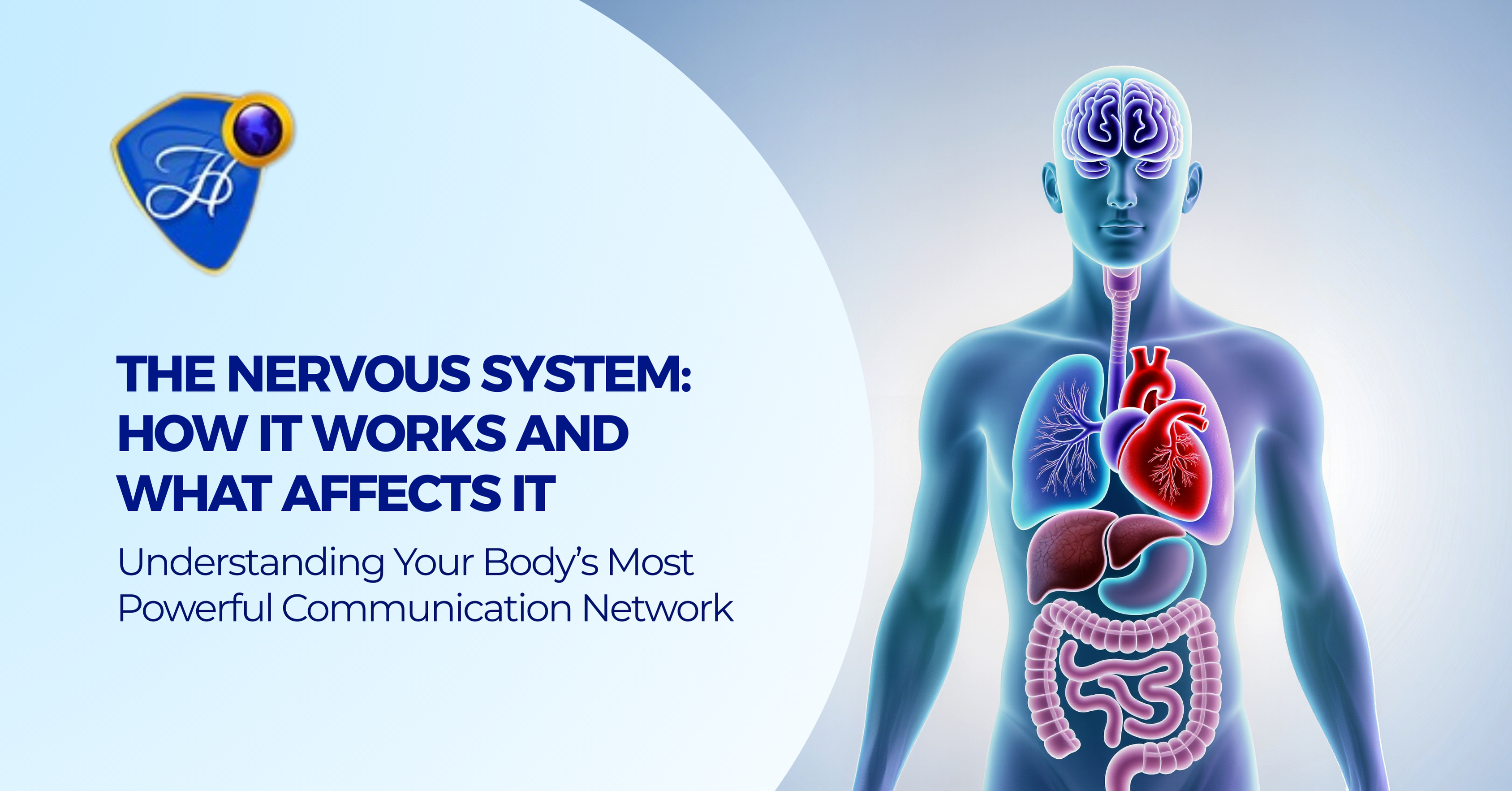
THE NERVOUS SYSTEM: HOW IT WORKS AND WHAT AFFECTS IT
The nervous system is one of the most remarkable systems in the human body. It is the control center that coordinates every movement, thought, emotion, and automatic function you perform—often without you realizing it. From blinking your eyes to remembering a name, from feeling joy to reacting to danger, your nervous system is constantly working behind the scenes.
Understanding how it functions and what affects it helps you make healthier choices that protect your long-term wellbeing.
What Is the Nervous System?
The nervous system is the body’s communication and command network. It uses electrical signals and chemical messengers to send information between your brain, spinal cord, and the rest of your body.
It is divided into two major parts:
1. Central Nervous System (CNS)
• Brain – the control center where decisions, memory, emotions, and coordination happen.
• Spinal cord – the main pathway that sends information between the brain and the body.
2. Peripheral Nervous System (PNS)
These are the nerves outside the brain and spinal cord. They connect the CNS to muscles, organs, skin, and glands.
The PNS has two branches:
• Somatic nervous system – controls voluntary movements (e.g., walking, writing).
• Autonomic nervous system – controls automatic functions (e.g., breathing, heartbeat, digestion).
The autonomic system further divides into:
• Sympathetic system – triggers “fight-or-flight.”
• Parasympathetic system – promotes “rest-and-digest.”
Together, these systems ensure your body functions smoothly every second.
How the Nervous System Works
The nervous system communicates through tiny cells called neurons. Neurons send electrical signals and release chemicals called neurotransmitters to pass messages.
Here’s how it works:
1. You experience something (touch, sound, smell, emotion).
2. Sensory nerves send the information to your brain.
3. Your brain interprets it.
4. Your brain sends instructions back through your nerves.
5. Your body reacts—pulling your hand away, smiling, running, calming down.
This entire process happens in milliseconds.
What Affects the Nervous System?
Because the nervous system controls so much, it is sensitive to many internal and external factors. Here are the major influences:
1. Stress
Chronic stress keeps the sympathetic nervous system activated, leading to: Headaches, anxiety, memory problems, sleep disorders, weakened immunity.
Prolonged stress can overstimulate the nervous system and cause long-term wear.
2. Poor Diet
The brain and nerves need nutrients like omega-3s, B-vitamins, antioxidants, and minerals. Poor nutrition can lead to: slowed nerve communication, fatigue, irritability, inflammation, nerve damage over time. Foods high in sugar, processed fats, and alcohol negatively impact the brain and nerves.
3. Lack of Sleep
During sleep, the brain clears toxins and repairs nerve pathways. Insufficient sleep contributes to: poor decision-making, memory loss, reduced concentration, mood swings, slower reflexes; Sleep is essential for a sharp, healthy nervous system.
4. Chronic Diseases
Conditions such as: diabetes (can damage nerves), hypertension, autoimmune disorders like multiple sclerosis, Parkinson’s disease; can all impair nervous system function.
How to Keep Your Nervous System Healthy
Here are simple ways to protect and strengthen your nervous system:
• Eat a nutrient-rich diet (fruits, vegetables, whole grains, nuts, omega-3 fats).
• Stay physically active to improve blood flow to the brain.
• Get enough sleep (7–9 hours).
• Practice stress-relief activities like deep breathing, prayer, meditation, or stretching.
• Limit alcohol and avoid harmful substances.
• Stay mentally active with reading, puzzles, and learning new skills.
• Stay socially connected, which stimulates and protects the brain.
• Stay hydrated, since the brain depends on water to function.
The nervous system is the body’s most sophisticated and delicate communication network. When it functions well, you think clearly, move confidently, and live vibrantly. By recognizing the factors that affect it and adopting daily habits that support its health, you can strengthen your mind, protect your body, and improve your overall quality of life.


















Comments
Eleanor Fant
One’s of the best template out of there. design, code quality, updates etc everything you needs guys, buy it you won’t regret it!
Alexander Ljung
This theme is super awesome! But I had one small issue with link option in parallax portfolio. The other day!
Shahnewaz Sakil
His many legs, pitifully thin compared with the size of the rest of him, waved about helplessly as he looked
Leave A Comment
Kindly note that your comment/reply will first be approved before it appears above